

(or how one rug nearly broke me, but gave in eventually)
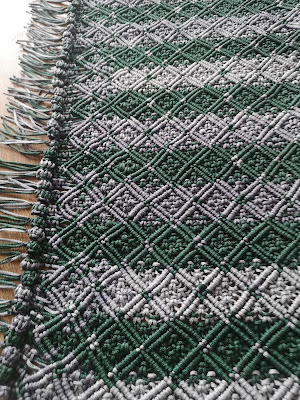
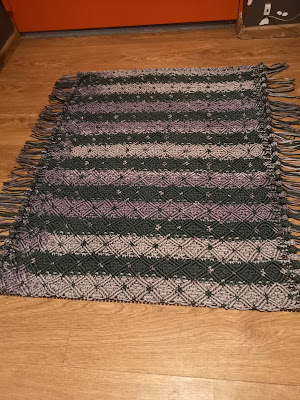
This rug was originally supposed to be 1 metre long.
That is not a figure of speech. It was an actual plan. Measurements. Calculations. Optimism.
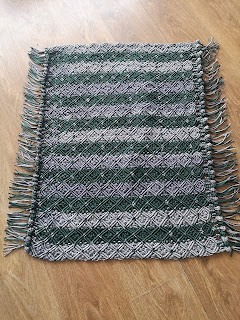
In reality, it ended up 85 × 65 cm.
So basically a doormat having an identity crisis and thinking it is a floor rug.
But let’s start at the beginning.
Mathematics, that old traitor
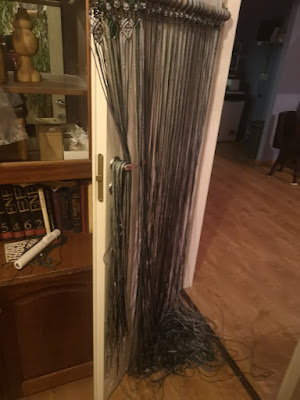
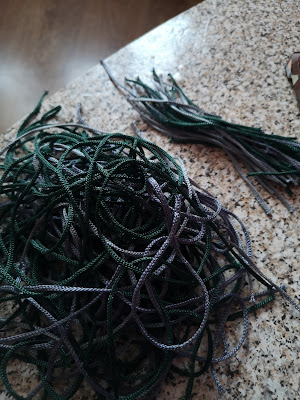
I cut the cords into 6-metre lengths.
Because:
- the internet said something,
- someone in a video did it,
- I thought, “ah, it’ll stretch”.
Reality: it didn’t.
A dense pattern eats cord like a black hole.
And if the pattern is pretty, it eats even more.
If you want a metre-long rug, don’t try to be a hero with 6 metres. Be sensible. Or at least less optimistic. And do not choose 3 mm cord. Nylon is good, especially for a hallway, but not 3 mm, not for a rug. And if you insist anyway, allow at least 10 metres per cord, giving you a working length of 5 metres. And, well, the holding cords can be calculated separately and can be only a little longer than the rug is expected to be.
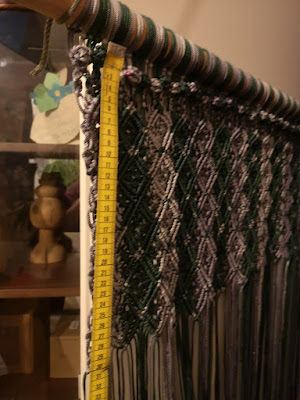
That moment when you discover you have made 30 cm and have only 1.5 m of cord left.
Extensions: the darker side of handicrafts
When you realise the cord has run out but the rug is only halfway done, you have three options:
- Undo the whole thing
- Cry
- Extend the cords and swear
- I chose the third, got my logic wrong and messed up the colour scheme
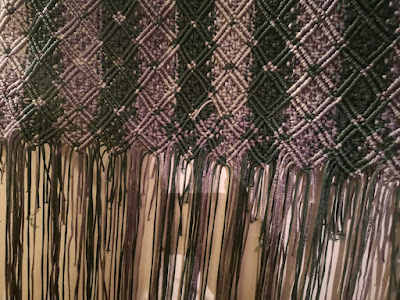
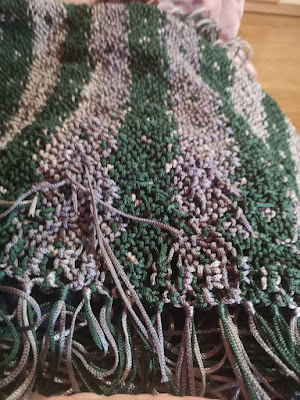
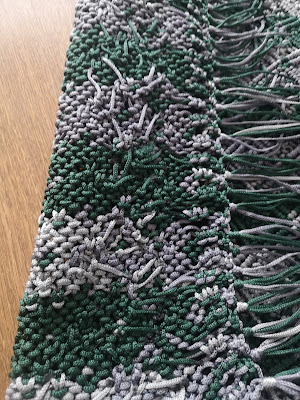
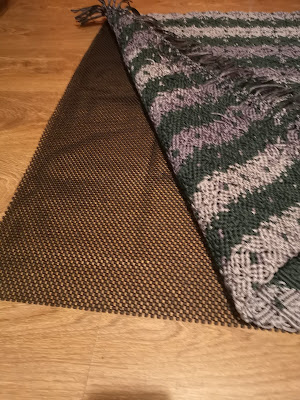
Stuffing the extensions between the cords and melting them onto the underside. The finished result on the wrong side, with longer ends left in case anything comes loose and needs fastening again.
Extending the cords meant:
- stuffing,
- hiding,
- melting,
- hiding again,
- and a little more melting.
As an added bonus, I melted:
- the ends of the rug,
- my fingertips,
- my nerves.
The physical cost
The cost of a rug is not just the material.
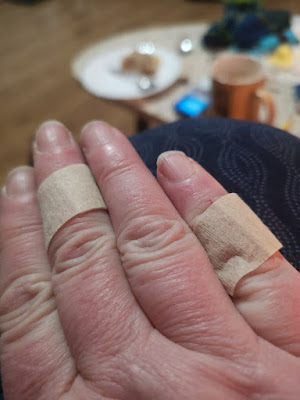
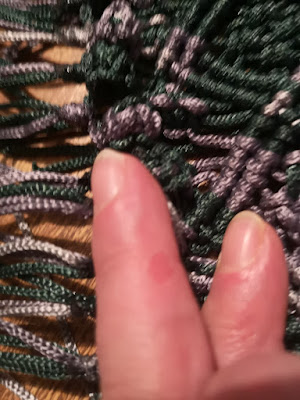
It includes:
- skin rubbed raw,
- plasters on several fingers,
- a thumb that cannot be plastered but hurts the most,
- and the fact that you do not play the piano wearing gloves. Nor do you do macramé in them.
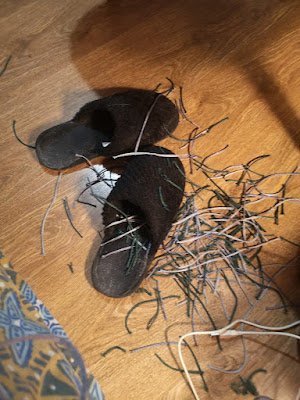
At one point I could not even put my slippers on because the floor was covered in:
- cut-off ends,
- bits of cord,
- and the remains of my patience.
Emotional state
I hated this rug.
Then I hated myself.
Then I hated mathematics.
I also slightly hated the people who had “provided the measurements”.
And then…
I carried on.
Because handicrafts are therapy.
Even when you hate them at that particular moment.
Or perhaps precisely because of that.
The result
And now it is:
- finished
- straight
- usable
- in its place in the hallway
It is not what it was supposed to be.
But it is what it became.
And honestly?
- no major mistakes scream at you,
- the fringe is not perfect, but it is honest,
- you cannot see the extensions unless you throw yourself onto the floor and inspect them with a magnifying glass
- This rug lives.
- And will probably live longer than the self-pity I wallowed in while making it.
The moral
If someone asks:
“How much would you charge for that?”
the answer is simple:
not less than €200.
Because this rug is not just a rug.
It is:
- hours of work,
- trial and error,
- blood (well, almost),
- and character.
And the only person allowed to step on it with muddy feet is someone who knows what they are standing on.
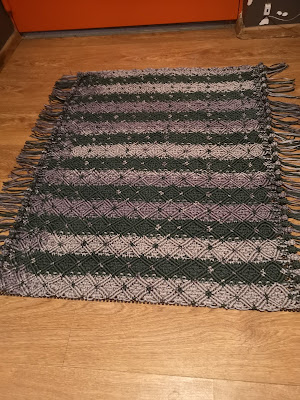
Full stop.
This rug is done.
And I am still here.
Here it is by the door, at its post
A companion from the ceiling
The rug did not remain alone.
There were bits left over.
And honestly, even before the last knot I already had it in my head that the hallway lampshade was not going to escape.
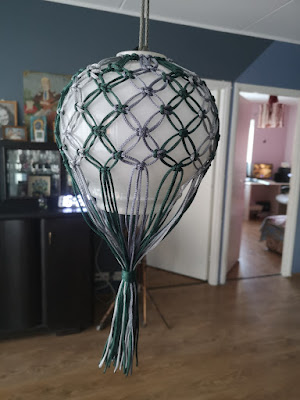
The very same shade that had been hanging from the ceiling for 17 years.
Quiet. Dusty. Loyal.
I took it down.
I washed off years’ worth of dust.
And looked it in the eye.
If the rug is dense and earthy, the lamp could be light and airy.
Something that does not weigh things down, but lets light through.
And so the net was born.
Or whatever the proper name for the thing is.
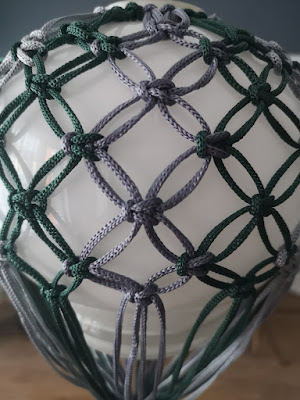
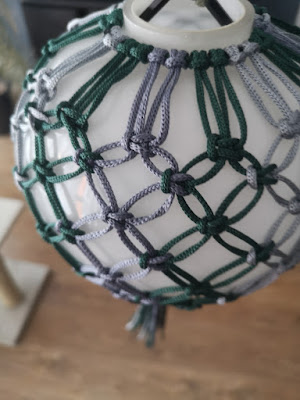
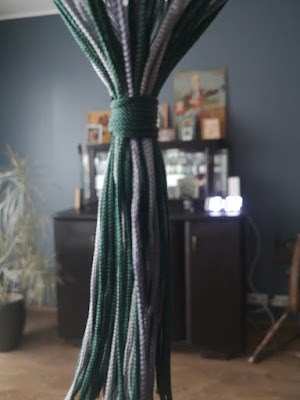
I could not make it any denser.
I ran out of cord. And this time I did not try to be a hero. I tied it off at the bottom. I did not want loose fringe hanging down.
I left just enough space between the knotting and the shade for a hand to fit through – the bulb still needs changing, after all.
Design is lovely, but it still has to function.
If the rug is stubbornness, the lamp is relief.
One keeps hold of the ground. The other keeps hold of the light.
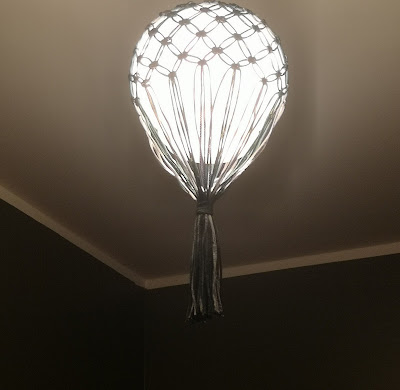
They are not a pair because they are alike.
They are a pair because they balance each other.
And honestly?
The rug is no longer pondering its identity.
Now it has someone hanging above it who can see the bigger picture.
Maimu and Bim
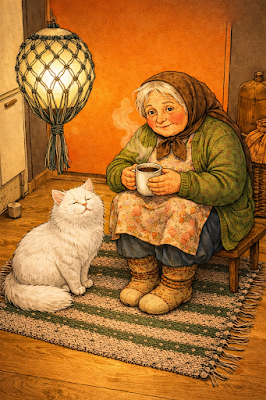
As usual, none of this work happened in a vacuum.
Bim was there from the very beginning.
He did not help. He did not offer support.
He watched.
For a long time.
In silence.
Judgementally.
Every wrong move earned me a look that said:
“Are you sure this is sensible?”
Once the rug was finished, he had nothing more to say.
But when I took the lampshade down from the ceiling, his stare sharpened again.
Apparently that already looked like excessive ambition.
Maimu is more practical.
In her opinion, it does not matter whether the thing is a rug, a doormat or a lamp net –
as long as it is finished, works and does not come to life on its own.
Bim watched.
Maimu nodded.
The lamp stayed on.
Both of them, Bim the cat and dear old Maimu, survived.
The rug survived.
So did the lamp.
And this time nobody is pondering their identity.
Everything has its place.